What Oma Säästöpankki measured after four weeks of AI coaching
In early 2026 I ran a four-week AI Coaching Program for a team of specialists at Oma Säästöpankki (opens in a new tab), a Finnish savings bank. Risk management, regulatory analysis, quality assurance. Work where a wrong answer is not a bug, it is a finding in an audit.
Jani Ahokas coordinated the pilot from the inside. He has since written up what they measured on his own LinkedIn. Every number below is his, not mine.
Where AI saved time in financial risk management
Across the pilot the team measured 15–50% time savings, depending on the task and how mature the solution was. The breakdown he reported:
- Regulatory interpretation and extraction: 25–40%. This one moved straight into daily use.
- GAP analyses against regulatory requirements: 25–30% faster than their conventional compliance review.
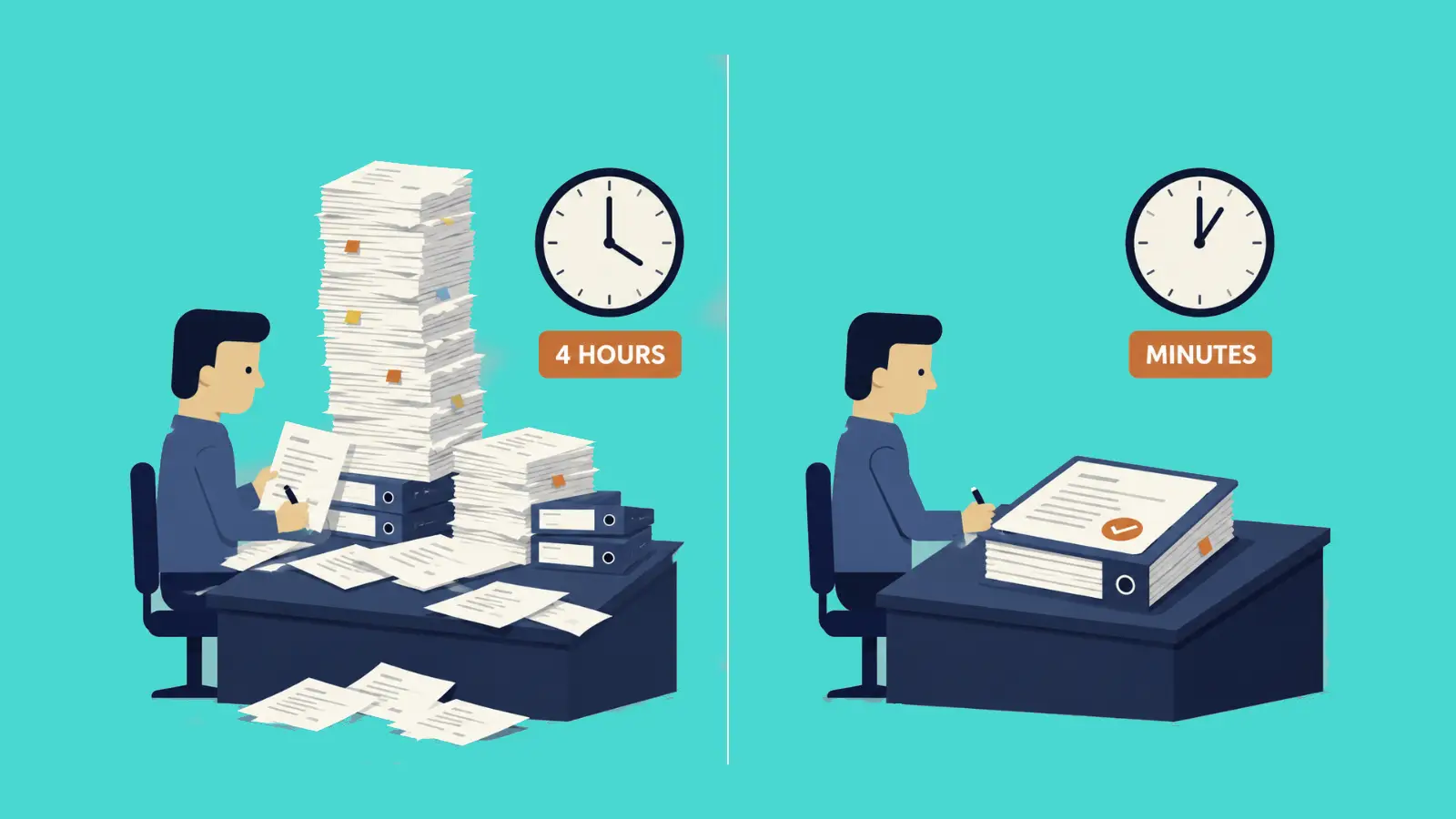
- Document comparison: the clearest single ROI in the pilot. Comparing complex communications against regulatory guidance used to be at least four hours of manual work. It became a task you brief in minutes. 4h → minutes.
- Process quality assurance: 15–35% on routine checking and review work.
That last one is the case I would keep if I could only keep one. Nobody had looked at the task that way before.
Four weeks, not a course
Nobody sat through training. They built.
The four weeks ran on the team's own real tasks, which is why the capability stayed behind when I left. The specialists can now scope, build and instruct AI agents themselves, inside processes they already own. That is the part that never shows up as a percentage.
His summary puts it better than I would, translated from the Finnish:
Expertise does not come from handing out tools. It comes from giving specialists the time to try, to learn, and to integrate AI into a new way of working.
What still needs a human
The pilot also produced a clear list of tasks AI should not be running unattended. I count that as a result, not a failure.
Generative AI is confident in exactly the places where a regulated business cannot afford confidence.
In a regulated business, knowing where an expert has to validate the output is what makes the rest of it usable. A 40% time saving you cannot defend in an audit is worth nothing. Human-in-the-loop was not a caveat here. It is the reason these solutions were allowed into daily work at all.
The tooling was the easy part
What decided the outcome was not the model or the tool. It was picking work where AI has a genuine edge, and then leading it. Document comparison won because the task is well defined, the inputs already exist as documents, and a specialist can verify the output in a minute.
Most AI pilots I see start from the tool and go looking for a use case. This one started from the work.
The pattern is not specific to banking. It showed up the same way with a team at Elisa: what held things back was never the technology.
The technology was ready a year ago. Choosing the right four hours is still the hard part.
I run four-week programs like this with expert teams. More on how I work.
Read more on Jani's LinkedIn profile: Jani Ahokas (opens in a new tab).